
Loading...
Serving Menifee, CA and surrounding areas. (951) 618-2116
SunGallery Menifee Sunrooms & Patios handles sunroom remodeling, enclosed patio conversions, and all season rooms throughout San Jacinto, CA, with sunroom additions, patio covers, and screen rooms built for the San Jacinto Valley climate. We manage all City of San Jacinto permits and respond within 1 business day.
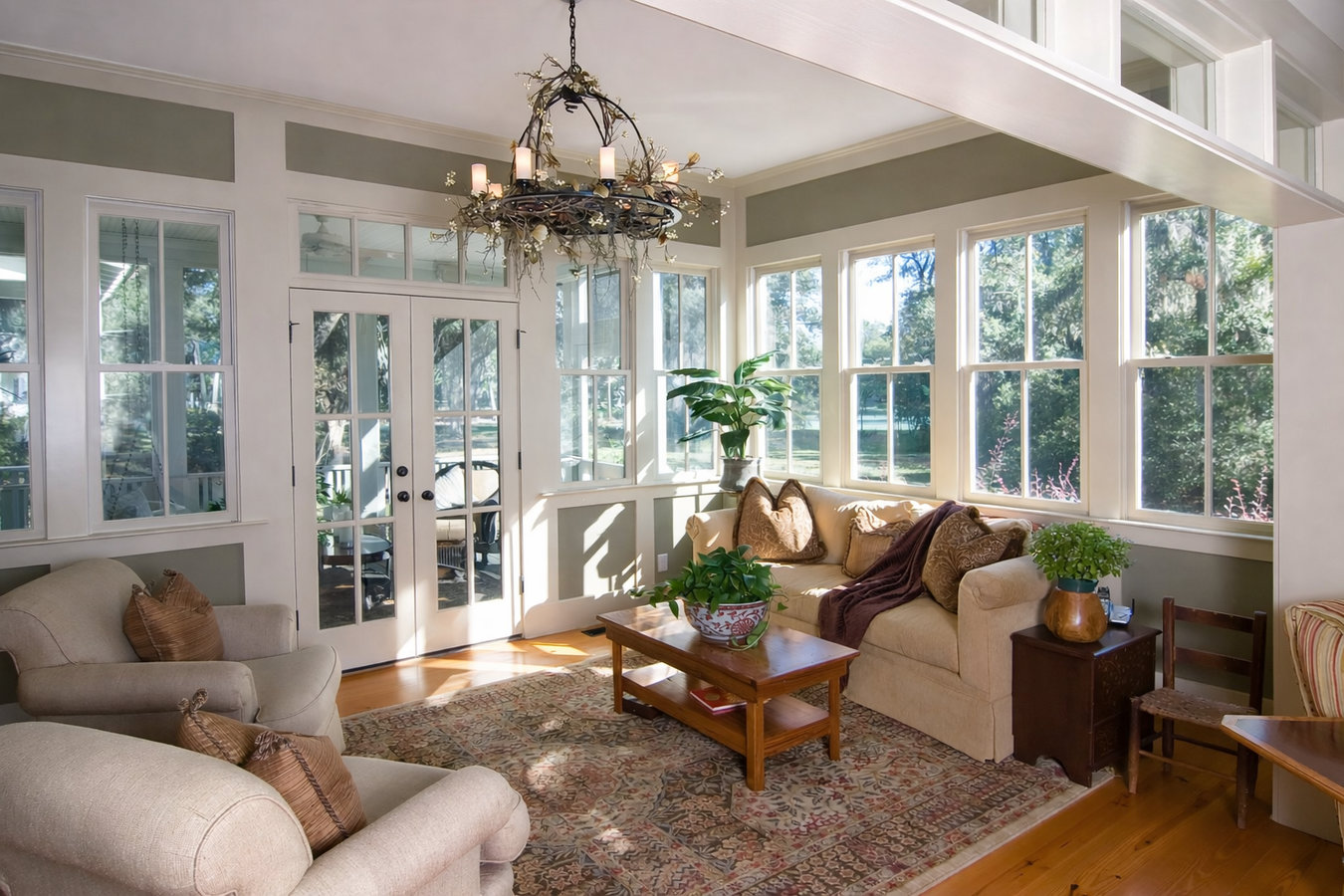
Most San Jacinto homes are single-story ranch-style houses on slab foundations built between the 1970s and the early 2000s. The services below are matched to what these properties and the San Jacinto Valley climate need - not generic offerings carried over from coastal markets.
Many San Jacinto homes from the 1970s through the early 2000s have older enclosed patio structures that were built without proper insulation, climate control, or current-code glazing - remodeling an existing sunroom brings the space up to a standard that works year-round instead of sitting unused through summer.
Learn more about sunroom remodelingSan Jacinto's single-story ranch homes typically have covered concrete patio slabs at the back of the house - converting that existing structure into a proper enclosed room uses the foundation that is already there and adds livable square footage without starting from grade.
The San Jacinto Valley sees temperatures above 100 degrees Fahrenheit in summer and occasional frost in winter - an all season room with insulated glass and a mini-split handles that full range and gives you a space that works in every month of the year.
A screen room is a cost-effective way to extend outdoor living through San Jacinto's spring and fall seasons - keeping Santa Ana wind-blown dust and debris out while allowing air to circulate freely during the cooler months when the valley is at its most comfortable.
Four season sunrooms with proper glazing and climate control are a practical fit for the San Jacinto Valley's wide temperature swings - delivering a room that functions as a home office, sitting area, or flex space throughout the year without the discomfort of an uninsulated enclosure.
San Jacinto's intense UV exposure and summer heat degrade unprotected outdoor spaces quickly - a patio cover provides the essential shade that makes the back patio livable through the hottest months and protects existing concrete work from accelerated weathering.
San Jacinto sits at about 1,600 feet elevation in the San Jacinto Valley, with the mountains rising sharply to the east and open desert to the north. That location drives a climate that is harder on homes than most of coastal Southern California. Summer temperatures regularly exceed 100 degrees Fahrenheit, and the UV exposure at this elevation breaks down roofing materials, exterior stucco, and glazing seals faster than in milder climates. At the same time, Santa Ana wind events blow through the valley each fall and early winter, with gusts that can top 50 mph. A sunroom or enclosed patio built without accounting for those wind loads and heat conditions will not perform well in this environment. Material selection, glass specification, and structural framing all need to be calibrated for what this valley actually delivers.
The ground itself is a consideration in San Jacinto that often goes unaddressed until a problem appears. The valley sits on clay-heavy soils that expand when wet and contract during the long dry summers. That seasonal movement is the primary driver of cracked concrete driveways, shifting slabs, and foundation stress throughout this area. Most of the housing stock was built between the 1970s and the early 2000s, and those original slabs have been through decades of this expansion-contraction cycle. Before any enclosed addition is designed or quoted, the existing slab condition needs to be evaluated - not assumed to be fine because the house looks solid from the outside.
Our crew works throughout San Jacinto regularly, and we pull permits through the City of San Jacinto on our clients' behalf. We know the current review timelines at the city's building department and factor them into every project schedule so the permit process does not create surprise delays after construction is planned.
San Jacinto is a city of roughly 35,000 to 40,000 people spread across a mix of established neighborhoods and newer subdivisions. State Street runs through the middle of the city, connecting the older blocks around downtown to the newer residential development on the east side. Mt. San Jacinto College, with its main campus right in the city, is a landmark that most San Jacinto residents know as a central community anchor. The mountains rise dramatically to the east - homes on the city's eastern edge have direct views of the San Jacinto Mountains, and those properties deal with wind and dust exposure that is more intense than what the western neighborhoods see.
We also regularly serve homeowners in neighboring Hemet and throughout the eastern Riverside County communities, so our crews are active in this part of the valley on a consistent basis.
Reach us by phone or through the estimate form. We respond within 1 business day to schedule a free on-site visit at your San Jacinto home. There is no fee and no obligation to book.
We visit your San Jacinto property, evaluate the existing patio or sunroom structure, assess slab and soil conditions, and walk through size, glass, climate control, and budget options. We review current City of San Jacinto permit requirements at this visit so the cost and timeline are clear before any proposal is presented.
Once you approve the written proposal, we prepare and submit the City of San Jacinto building permit application. We manage the review process and notify you when the permit is approved and construction can be scheduled.
We complete all framing, glass, climate control, and finish work to the approved plan and schedule the city's final inspection. We walk through the completed room with you at the end to confirm everything is right before we close the job.
We serve San Jacinto and the surrounding San Jacinto Valley. Free on-site estimates with no obligation to book.
(951) 618-2116The City of San Jacinto issues its own building permits for sunroom additions and patio enclosures. We prepare and submit all documentation and manage the review process through to permit approval. Homeowners who try to navigate the California Title 24 energy code requirements on their own often encounter delays that push construction starts back by weeks.
San Jacinto summers push past 100 degrees Fahrenheit for weeks at a time, and the valley's UV exposure breaks down standard glazing seals and exterior finishes faster than in coastal climates. We specify low solar heat gain glass and properly sized mini-split systems on every project here because a room that overheats is a room that sits empty from June through September.
San Jacinto's clay-heavy soils move with the seasons, and that movement is why concrete cracks so commonly in this area. We assess the existing slab condition at the on-site visit before recommending any approach. Any needed slab repair or drainage correction is included in the written proposal - not added after the project is already under way.
The San Jacinto Valley sits in the path of Santa Ana wind events that can gust above 50 mph in fall and early winter. We engineer framing connections and specify glazing to handle those wind loads - not just standard residential minimums. That preparation means the room holds up when the winds come through, season after season.
San Jacinto homeowners get a contractor who understands the specific demands of this valley - the heat, the clay soil movement, the Santa Ana winds, and the City of San Jacinto permit process. That preparation means fewer surprises and a room that actually holds up over time.
San Jacinto is a city of roughly 35,000 to 40,000 people in Riverside County, sitting at the foot of the San Jacinto Mountains in the valley that shares the city's name. The city grew through several decades of suburban expansion, with most of its housing built between the 1970s and the early 2000s. The typical home is a single-story ranch on a lot of about 6,000 to 10,000 square feet with a stucco exterior, a slab foundation, and a backyard patio. Downtown San Jacinto is the historic core of the city, with older structures and streets that have been part of the community for generations. Mt. San Jacinto College, whose main campus sits right in the city, serves tens of thousands of students across the region and is one of the most recognized institutions in the San Jacinto Valley. The city's Wikipedia entry notes that San Jacinto is an incorporated city separate from adjacent Hemet, with its own municipal services and building department.
The San Jacinto Mountains rise dramatically to the east of the city, making the mountain backdrop one of the defining features of life in San Jacinto. Newer residential subdivisions on the city's eastern edge have some of the best mountain views but also face more direct wind exposure from the pass corridors. The western and central neighborhoods, including blocks near the downtown core and the MSJC campus, are more established and include some of the city's oldest homes. Adjacent Hemet borders San Jacinto to the south and west, and the two cities share much of the same valley infrastructure, climate, and property character - many homeowners in the area move between the two cities without thinking of them as separate markets.
Call SunGallery today or fill out the estimate form - we serve San Jacinto and the surrounding valley and respond within 1 business day.