Loading...
Serving Menifee, CA and surrounding areas. (951) 618-2116
SunGallery Menifee Sunrooms & Patios builds four season sunrooms, patio enclosures, and custom room additions for Eastvale homeowners - sized for the large lots and two-story homes here, built for triple-digit summers, and designed to meet HOA requirements. We reply within 1 business day and every estimate is written with no obligation.
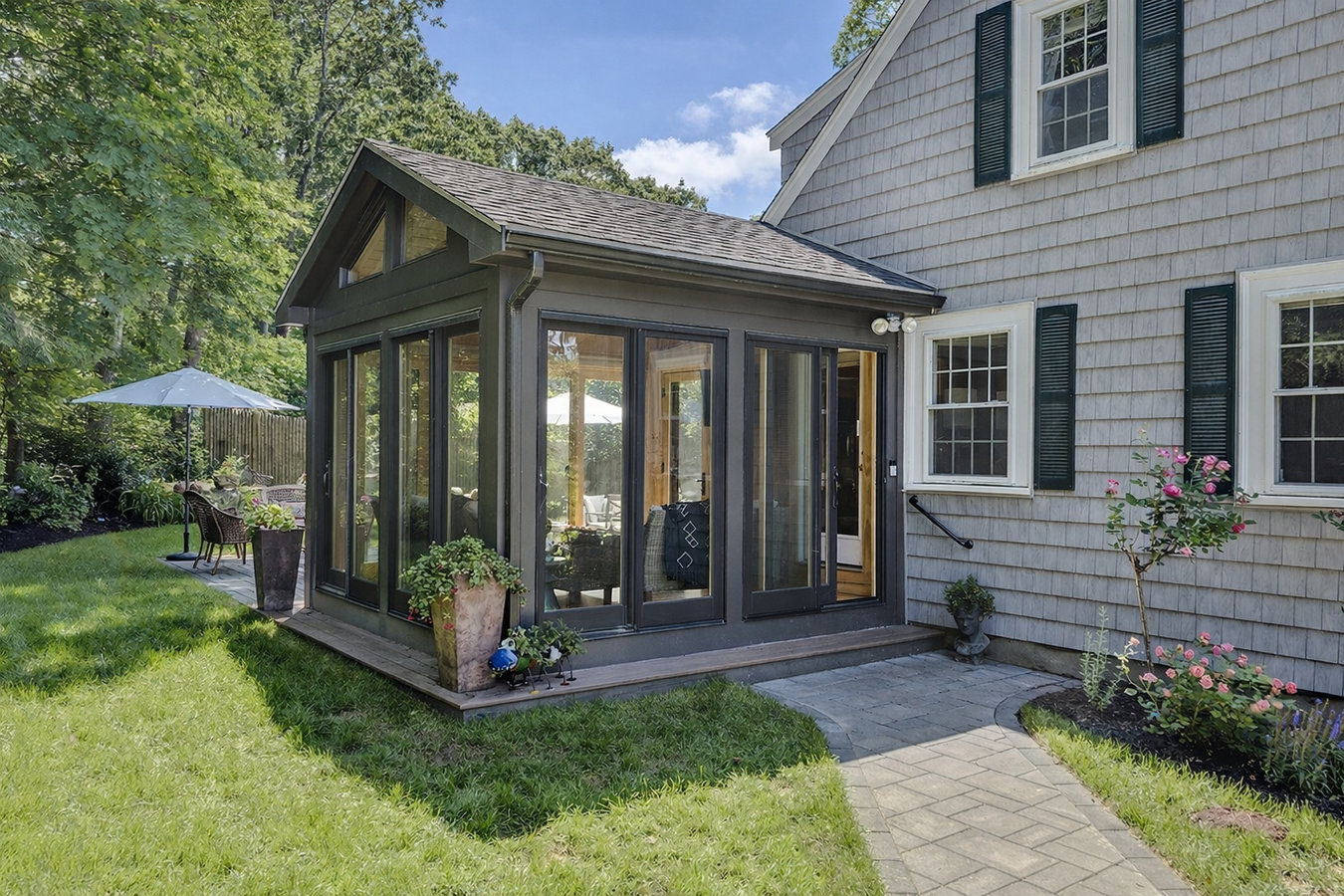
Eastvale is a newer city with larger-than-average lots, HOA-governed communities, and two-story homes that were almost entirely built in the 2000s and early 2010s. The services below reflect what fits best for homeowners here - projects that make sense given the property sizes, climate, and community standards that define this city.
Eastvale homeowners invest heavily in their properties, and a four season sunroom delivers conditioned living space that works in every month of the year - including the months when the Inland Empire hits 105 degrees. With low-SHGC glass and a dedicated mini-split, it is a comfortable room in July and usable on a cold January morning. See how we build four season sunrooms across the region.
See our four season sunroom workEastvale homes typically have large concrete patio areas in the backyard that were poured when the house was built. Converting that existing slab into an enclosed patio room avoids the cost of new concrete work and takes advantage of what is already there. For homes where the patio faces west or south, proper glazing selection makes the difference between a room you use and one you avoid all summer.
Many Eastvale homes have the lot depth to support a purpose-built sunroom addition that adds genuine square footage to the home's footprint. Unlike a patio enclosure, a new addition allows for fully custom sizing and layout, and the space shows up as conditioned square footage in an appraisal. The larger lots common in Eastvale give us room to work with that we do not always have in denser cities.
Eastvale's spring and fall evenings are pleasant enough to be outside, but Santa Ana winds push dust and debris across the Inland Empire basin on an annual cycle. A screen room keeps the airflow while blocking wind-driven particulates and insects - a cost-effective step up from an open patio that does not require cooling to be livable.
Larger homes in Eastvale sometimes call for a sunroom that is designed from scratch rather than converted from an existing patio. A custom build allows the room to match the architecture of the house, meet specific HOA material requirements, and be positioned for the best orientation relative to sun and shade throughout the year.
A patio cover in Eastvale serves as a practical first step: it reduces solar heat gain on the back wall of the house, makes the patio usable in summer, and can function as the roof structure if you decide to enclose the space later. Many HOAs in Eastvale permit patio covers with simpler approval requirements than a full enclosure - which makes it a reasonable starting point when full approval timelines are a concern.
Eastvale sits in western Riverside County, near the intersection of the 15 and 60 freeways, in a part of the Inland Empire that sees summer temperatures regularly above 100 degrees Fahrenheit with no coastal breeze to moderate the heat. Most homes here were built in the 2000s and early 2010s, which means they are now hitting the 15-to-25-year mark where first-round maintenance and upgrades typically begin - driveways, HVAC systems, and concrete patio surfaces all start to show wear in this window. The large lot sizes that make Eastvale attractive also mean that backyards carry a substantial amount of concrete flatwork: long driveways, wide patios, and side yards that are exposed to the intense summer sun and occasional winter frost that the Inland Empire delivers on an annual cycle.
What sets Eastvale apart from most other cities in this region is the degree to which HOA covenants shape exterior work. The majority of Eastvale neighborhoods were built and platted as planned communities with active homeowners associations, and most of those associations require written architectural approval before any exterior addition can begin. A contractor who does not account for that process will give you a timeline that does not reflect reality. Beyond the HOA layer, the clay-heavy soils that underlie much of the western Inland Empire create the same foundation movement pressures here as in neighboring cities - soil that swells in wet winters and contracts in dry summers, putting stress on concrete slabs and anything anchored to them. Both factors - HOA process and soil behavior - need to be part of the planning conversation from the first visit, not surprises that surface midway through a project.
Our crew works throughout Eastvale regularly, and we understand the local conditions that affect sunroom contractor work here. Eastvale only incorporated as its own city in 2010, and virtually all of its residential construction was done by production builders in the decade before that - which means the housing stock across the city is remarkably consistent. The homes we work on here are typically two-story stucco exteriors with tile roofs, three-car garages, and backyards that have more usable concrete than you would find on a comparable-priced lot in Corona or Norco. Hamner Avenue is the main commercial corridor most residents pass through daily, and the residential neighborhoods branch off from there into subdivisions that share similar lot configurations and HOA governance structures.
Eastvale is also served by the Corona-Norco Unified School District, and that school quality is one of the main reasons families settle here long-term rather than treating the city as a starter stop. Long-term homeowners invest more in their properties - and they tend to make decisions with a longer horizon, which is why we see more full four season room projects here than quick screen room installs.
We also serve homeowners in Moreno Valley to the east and work throughout this part of the Inland Empire regularly. If you are in Eastvale or a nearby community and want to discuss a project, we respond to every inquiry within 1 business day.
Reach us by phone or through the contact form. We respond within 1 business day to schedule your free in-home consultation. If your neighborhood has an HOA, bring any relevant CC&R excerpts to our visit and we will note what the approval process requires.
We visit your Eastvale property, measure the backyard and existing slab or outdoor space, and identify site factors like soil conditions and sun orientation. The cost estimate we provide reflects what your specific project requires - not a number pulled from an average.
You receive a detailed written estimate before anything is signed. We prepare HOA submittal documentation if your community requires it and file the City of Eastvale building permit application in parallel - so both approvals run concurrently rather than one after the other.
Once permits and HOA approval are in hand, our crew completes foundation work, framing, glazing, electrical, and finish work in sequence. A city inspector signs off at completion and we do a final walkthrough with you before the project closes.
We work with Eastvale homeowners through the full process - HOA submittal, city permit, and construction - from a single point of contact. Every estimate is free and in writing.
(951) 618-2116Eastvale is one of the newest cities in California, having incorporated in 2010 after years of rapid growth as a census-designated place. Its population of roughly 72,000 is spread across a primarily residential landscape of planned subdivisions built in the 2000s and early 2010s. Homes here are noticeably larger than what you find in neighboring cities - two-story layouts in the 2,500-to-4,000-square-foot range are common, with three-car garages, long concrete driveways, and substantial backyard patio areas. Most were built by production builders like KB Home, Lennar, and Richmond American as part of planned communities with active HOAs. The Eastvale Community Park is the city's main public gathering space, and the neighborhoods around it represent the older end of the city's residential stock - which still means homes built in the early 2000s rather than the 1980s you find in neighboring cities to the east.
Because most homes in Eastvale were built within a relatively short window of time, they tend to share similar material profiles and are now hitting similar maintenance milestones simultaneously. Concrete flatwork, HVAC systems, and roofing installed in the early 2000s are all reaching the end of their expected service life at roughly the same time. The city's location near the 15/60 freeway interchange makes it easy to reach from across the Inland Empire, and many residents commute to Los Angeles or Orange County while investing heavily in the home they return to each evening. Nearby Moreno Valley to the east shares parts of the same Inland Empire climate and housing profile, though its stock is older and the lot sizes tend to be smaller. Together they represent a corridor of growing homeowner investment in outdoor living space that we serve on a regular basis.
Get a free written estimate for your sunroom, patio enclosure, or four season room project in Eastvale. We handle HOA submittal and city permits from start to finish.