Loading...
Serving Menifee, CA and surrounding areas. (951) 618-2116
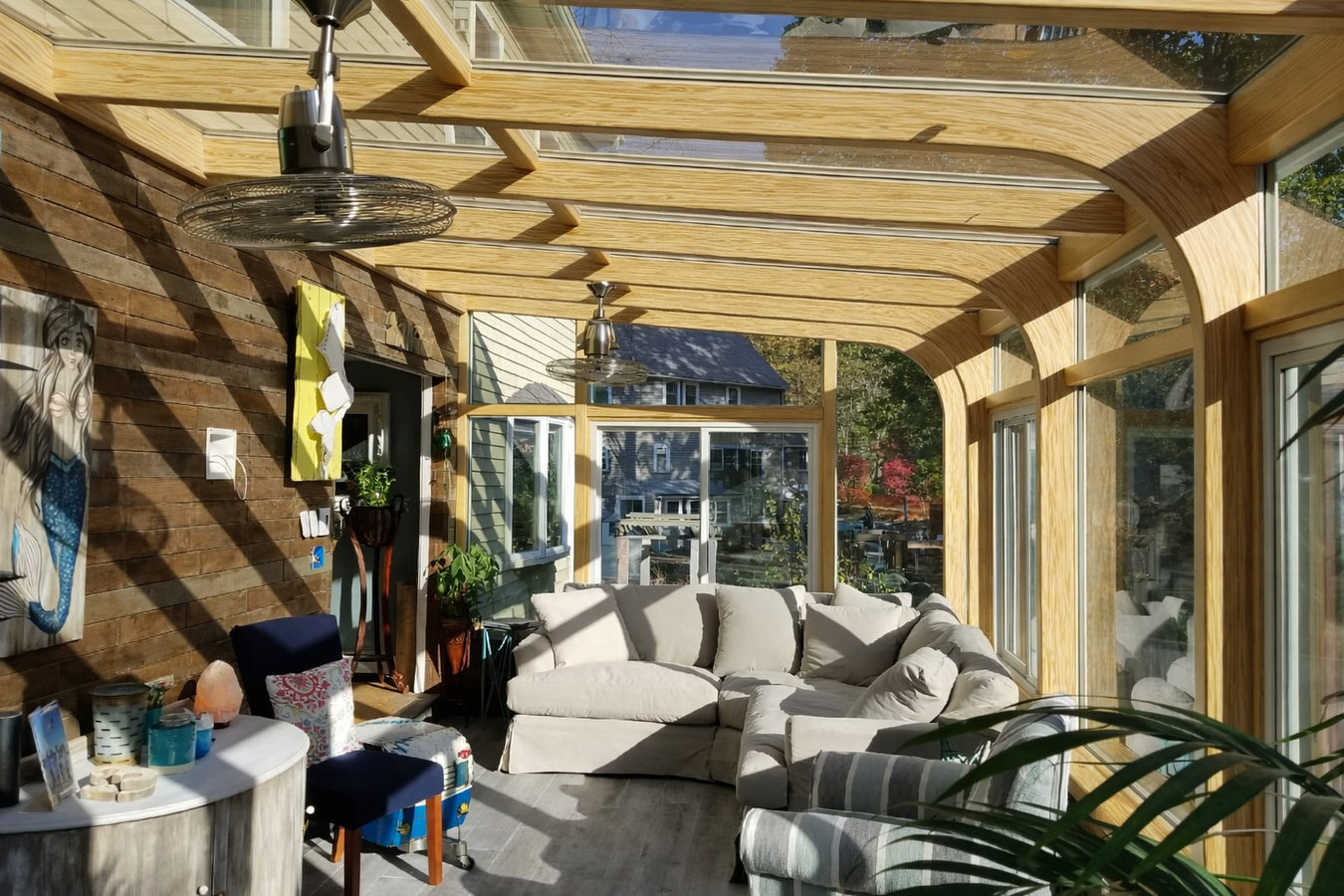
Your existing deck gives you a head start - we assess the structure, handle HOA and permit approvals, and build a room engineered for Menifee heat.
A deck-to-sunroom conversion in Menifee means enclosing an existing outdoor deck platform with walls, windows, a proper roof, and a foundation designed to support a livable room - most projects taking four to eight weeks of active construction once permits are approved.
Unlike a patio conversion where the concrete slab is already in place, a deck conversion starts with a structural assessment. The deck's framing and footings are evaluated before any walls go up, because a structure built for outdoor furniture has different load requirements than an enclosed room. In Menifee specifically, the clay-heavy soil in many neighborhoods can cause footings to shift over the years, so that assessment is not optional - it is the foundation of a conversion that holds up long-term.
If you have a concrete patio rather than a raised deck, the process is somewhat different - you can read about that on our patio-to-sunroom conversion page. Both paths end up in the same place: a permitted, finished room that adds real square footage to your home.
If you walk past your deck all summer without stepping on it because it is simply too hot to use, you are losing months of potential living space every year. Menifee's summers are long and intense, and an open deck offers no relief from the heat. A sunroom with proper insulation and climate control turns that dead space into a room your family uses year-round.
If your family has outgrown your home's square footage - you need a playroom, a home office, or a place to entertain - but you do not want the disruption and cost of a full addition, your existing deck is a head start. The structure is already there. Converting it into a sunroom is typically faster and less expensive than building a new addition from scratch.
If your deck's surface boards are weathered or faded but the framing underneath is still firm and level, you are in a good position for a conversion. Rather than spending money to replace the decking and still have an outdoor space that bakes in the Menifee sun, converting the whole structure into an enclosed room gives you a better return on that investment.
If stepping outside feels like leaving your home rather than extending it - if there is a jarring transition in flooring, temperature, or comfort - a sunroom conversion creates a seamless flow between your indoor living space and the backyard. Many Menifee homeowners describe the finished room as the space their family gravitates to most.
Every deck conversion starts with a structural evaluation - not a sales pitch. We assess the framing, footings, and connection points to your home before committing to any design. If the deck needs structural upgrades, we tell you exactly what and why before work begins. From there, we frame the walls, install windows that meet California's energy requirements, build the roof, and finish the interior to the same standard as your home. The city inspection process verifies the work at key stages so you have documentation the room is built correctly.
How the room is heated and cooled is one of the most consequential decisions you will make. In Menifee, summer temperatures regularly exceed 100 degrees F, and a room without a proper cooling connection will be unusable from June through September. We build both three-season and four-season rooms, but we are straightforward with Menifee homeowners: a three-season room in this climate is really a spring-and-fall room. For homeowners who want a lighter enclosure option, we also build all season rooms designed for comfortable use across every month of the year without the full construction scope of a sunroom addition.
Best for homeowners who want bug protection and light weather shelter during spring and fall - not designed for full summer cooling in Menifee's climate.
Best for Menifee homeowners who want to use the space every month - fully insulated with a cooling and heating connection so summer heat and cool winter nights do not lock you out.
Best for decks with solid framing and level footings that pass the structural assessment - the enclosure is built on the existing platform, which keeps cost down.
Best for decks where the framing or footings need reinforcement before enclosure work can begin - we handle structural upgrades as part of the project scope.
Two local conditions make deck conversions in Menifee different from the same project in a coastal city. First, the heat: Menifee sits in the Inland Valley, where summer temperatures regularly exceed 100 degrees F. A sunroom that is not built with proper insulation and energy-efficient windows will become an oven, not a room. California's energy standards for enclosed living spaces exist precisely to address this, and every room we build is designed to meet those standards so the space stays comfortable year-round. Second, the soil: much of Menifee sits on clay-heavy ground that swells when wet and shrinks during the long dry summer. That movement can shift footings over time, which is why our structural assessment on every deck conversion includes a specific look at footing stability - not just the surface framing. Homeowners in Sun City deal with both the older housing stock and the same soil conditions, and the assessment process there is just as important.
Menifee's rapid growth also means a large portion of the city's homes are in HOA-governed master-planned communities. Audie Murphy Ranch, Menifee Lakes, and similar developments all have architectural review committees that require written approval before any exterior addition can begin. HOA review is a separate process from the city building permit, and it has to happen first. Contractors who are not familiar with Menifee's communities often underestimate this step, which adds unexpected weeks to a project timeline. Homeowners in Wildomar and surrounding Southwest Riverside County communities face a similar HOA landscape, and the same preparation applies. For a broader look at how California handles building standards for enclosed living spaces, the California Department of Housing and Community Development publishes the applicable building standards.
When you reach out, we ask about the size of your deck, its age, whether you have an HOA, and what you are hoping to use the room for. You will hear back within one business day. This helps us show up to the site visit with relevant questions rather than starting from scratch on your property.
We visit your home to measure the deck, evaluate the framing and footings, and look at how the deck connects to your house. We check specifically for footing stability, because Menifee's clay-heavy soil can cause shifting over time. A written, itemized estimate follows within a few days so you know what the project costs before committing.
If your neighborhood has an HOA, we prepare the architectural review package on your behalf before filing anything with the City of Menifee. Once HOA approval is in hand, we submit the building permit application. Plan for the combined HOA and permit process to take four to eight weeks - your contractor should keep you updated throughout.
Once permits are approved, the crew addresses any structural upgrades the deck needs, then frames the walls, installs the roof, and sets the windows and doors. Interior finishing, insulation, and any climate control connections follow. A city inspector verifies the work at key stages. At final walkthrough, we hand over all permit documentation.
Free, written estimate. No obligation. We assess the structure before you commit to anything.
(951) 618-2116We evaluate your deck's framing, footings, and connection to your home during the on-site estimate - before you sign anything. Menifee's post-2000 housing stock generally means decks are in better shape than those in older Inland Empire cities, but Menifee's clay-heavy soil can shift footings over time. We tell you exactly what the structure can support and what, if anything, needs attention first.
Homeowners in communities like Audie Murphy Ranch and Menifee Lakes face two separate approval processes - the HOA architectural review and the city building permit. We prepare and submit both on your behalf so neither process stalls your project. Contractors familiar with Menifee's Community Development Department submit complete plans the first time, which avoids the back-and-forth that extends timelines.
California requires that new enclosed living spaces meet energy efficiency standards for insulation, windows, and any HVAC equipment. We build to those standards not just because the permit requires it, but because it is the difference between a room you can use in August and one that becomes a glass oven. High-performance, low-emissivity glass blocks heat while letting in light - a meaningful comfort difference in Menifee summers. Learn more about energy standards at Energy.gov.
A permitted sunroom adds to your home's official square footage, which matters to appraisers and buyers in Menifee's active real estate market. An unpermitted deck conversion can complicate a sale, require disclosure, or need remediation before closing. Every room we build goes through the city's building department so the addition is on record and protects your equity - not just adds to it in appearance.
A deck-to-sunroom conversion is a meaningful investment, and the details matter: soil conditions, footing integrity, HOA timelines, and energy-efficient construction all affect whether you end up with a room that adds lasting value or one that creates problems two years down the road. We address those details upfront so you know exactly what you are getting before work begins.
A year-round enclosed space option for homeowners who want comfortable use across every season without the full construction scope of a sunroom addition.
Learn MoreIf you have a concrete patio slab rather than a raised deck, this is the conversion path - same end result, different starting point.
Learn MoreMenifee's permit process takes time to get started - call us today or request a free written estimate and we will get the process moving before summer heat arrives.